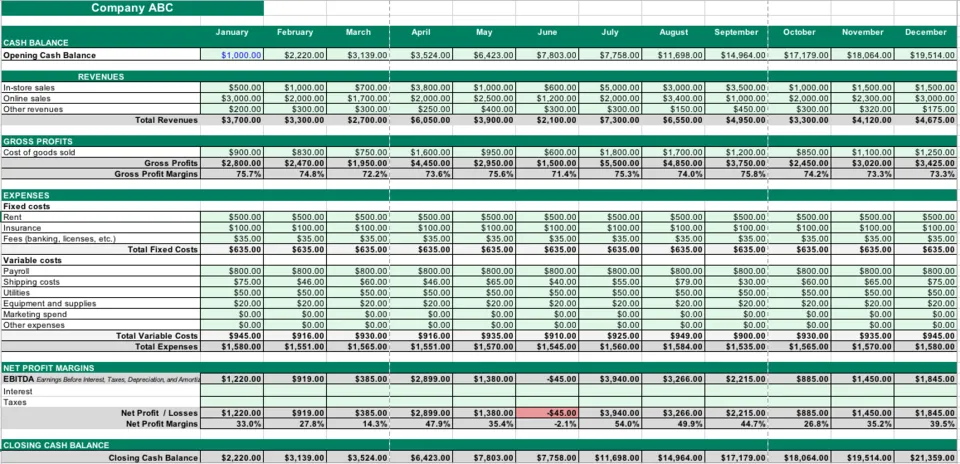
A useful review of cash flow applicability for private company separates the headline promise from the operational details. The right starting point is your goal, available budget, location, time horizon, and tolerance for the risks that come with this financial topic.
How to frame cash flow applicability for private company
A meaningful comparison should cover total cost, eligibility, practical benefits, limitations, provider transparency, and available alternatives. Check at least two or three realistic alternatives using the same assumptions so that a low headline price is not hiding a more expensive overall outcome.
Costs and criteria to compare
The main risks to review are hidden fees, outdated terms, unsuitable commitments, and decisions based on promotional claims alone. Their importance changes by provider and personal circumstances, so read the complete terms and do not rely on an old screenshot, cached quote, or promotional summary.
Risks and verification checks
Primary-source checks should include primary-source terms, current fees, eligibility, cancellation rules, and independent comparisons. If a provider does not disclose these clearly, treat that as a comparison disadvantage rather than filling the gap with assumptions.
Questions worth asking before you choose
Before choosing, ask what happens when you need support, cancel, dispute a transaction, move your data or money, or use the service outside the most common scenario. Clear answers to these edge cases often distinguish a durable option from a short-term promotion.
Practical next steps
A practical next step is to shortlist the options that meet your non-negotiable criteria, calculate the complete cost, and test the smallest reversible action first. Recheck the decision whenever fees, rules, or your financial situation changes.
Current sources and perspectives
Use these source summaries as a starting point and verify fees, rates, and eligibility directly with each provider before making a financial decision.
Cash Flow Statement Applicability: Who Is Exempt (2026)
Companies Act 2013 · s.2 (40) · AS 3 / Ind AS 7 · FY 2026-27 Cash Flow Statement Applicability — Who Must Prepare It? A cash flow statement is part of a company's financial statements — but four categories are specifically left out: One Person Companies, small companies, dormant
PDF Handbook: Statement of cash flows - kpmg.com
The underlying principles in Topic 230 (statement of cash flows) seem straightforward. Cash flows are classified as either operating, financing or investing activities depending on their nature. But identifying the appropriate activity classification for the many types of cash
PDF Handbook: Statement of cash flows - KPMG
A statement of importance The statement of cash flows is a central component of an entity's financial statements. Potentially misunderstood and often an afterthought when financial statements are being prepared, it provides key information about an entity's financial health and
6.7 Classification of cash flows - Viewpoint
ASC 230 identifies three classes of cash flows—investing, financing, and operating—and requires a reporting entity to classify each discrete cash.
Roadmap: Statement of Cash Flows (June 2025) - Deloitte
This Roadmap provides Deloitte's insights into and interpretations of the accounting guidance on the statement of cash flows, primarily that in ASC 230. The accounting principles related to the statement of cash flows have been in place for many years; however, errors in the
Cash flow statement mandatory under Companies Act 2013
The Companies Act, 2013 (the Act or New Act) brought in many changes which directly impact preparation of financial statements and require understanding of the new definitions and provisions. Earlier, The Company act 1956 didn't include cash flow statement in the Definition of
Related Topics
- best cash flow budgeting app
- cash flow analyzer app sap
- bill tracker app australia
- banking app basics
- net worth tracker app free
What should I compare when researching cash flow applicability for private company?
Compare total cost, eligibility, practical benefits, limitations, provider transparency, and available alternatives. Use the same assumptions for every option so the total cost and practical limitations remain visible.
What risks should I check before using cash flow applicability for private company?
Review hidden fees, outdated terms, unsuitable commitments, and decisions based on promotional claims alone. The exact exposure depends on your provider, location, financial position, and how the product or service is used.
How can I verify information about cash flow applicability for private company?
Confirm primary-source terms, current fees, eligibility, cancellation rules, and independent comparisons. Use current primary-source documents for the final decision because rates, availability, and terms can change.